
Model Results
America’s Pasture Results
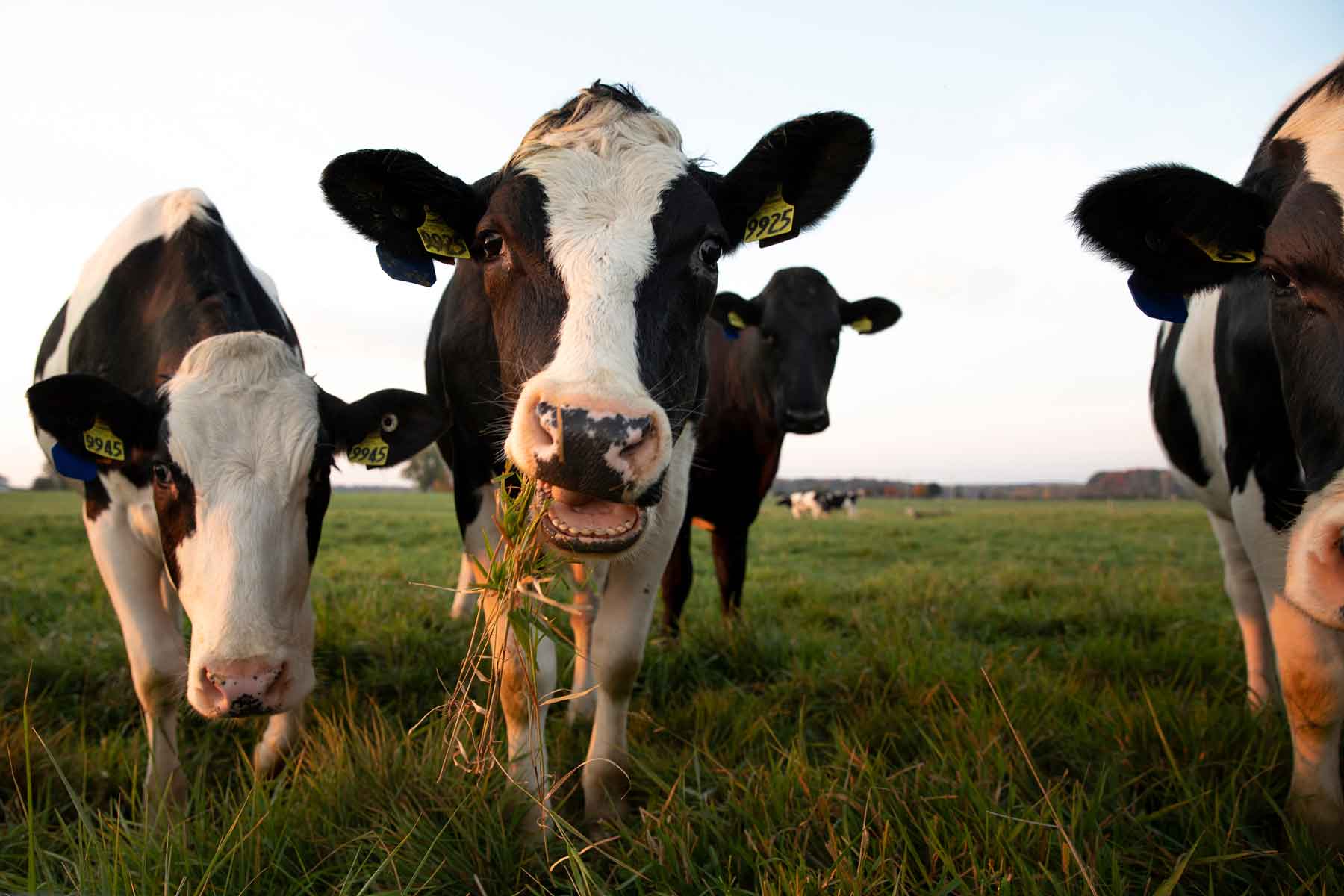
In 2050, more than half of all farmland is grazing land.
Scenario Snapshot
- Half of all cropland has been converted to perennial agroecosystems, including managed grazing and agroforestry.
- 50% of remaining annual croplands incorporate cover crops.
- Corn ethanol production has been virtually eliminated, due to the transition to electric vehicles.
- Americans consume slightly less total meat and dairy, but significantly more grass-fed animal products.
America’s Pasture
Toggle between the two climate projections – wet & warm and dry & hot – to see how climate conditions impact the outcomes. These climate projections represent the two ends of the range of six total projections we used in our models.
* 2002-2021 (Baseline 0) and 2051-2070 (Future)
Key Takeaways from America’s Pasture
What do these model results mean? The following takeaways describe how this scenario’s model results compare to conditions today and to the model results of the other three scenarios. Unless specified, these takeaways hold for both the warm-and-wet and hot-and-dry climate projections.
2050 versus Today
Depending on climate conditions, a possible boom in food supply.
In wetter climates with moderate global warming, potential food supply increases substantially, with most of the landscape devoted to producing grain or grazed livestock. The increase in plant-based diets means humans directly consumer more of that grain. In hot and dry climates, a modest decline in food supply occurs, blunted somewhat by the growth in plant-based diets.
Biofuel production plummets.
The transition to electric vehicles crushes biofuel demand, all but eliminating the industry and freeing up cropland area for alternative uses.
Big progress on stemming erosion, but nutrient pollution persists.
The widespread conversion of farmland to pasture slows sediment loss, but can’t immediately address decades of nitrogen and phosphorus application. This legacy, plus stronger and more frequent storms, lead to a slight worsening of phosphorus runoff and a slight improvement at best in nitrogen leaching.
Gains in biodiversity and carbon storage.
The conversion of landscape to pasture greatly increases perennial biomass, creating much more space for plant and animal life to thrive. These changes also lead to a more modest increase in carbon stored on the landscape.
America’s Pasture versus The Other Three Scenarios
Food: Best for food production.
This scenario is unique in that most of the landscape is devoted directly or indirectly to food production due to widespread diet changes. Many former croplands are converted to pastures that raise grass-fed livestock, and remaining annual crops have been steered more directly to people’s plates.
Biofuel: Lowest biofuel production.
America’s Pasture and Restoration Agriculture virtually eliminate biofuel production, meaning their output of bioenergy is significantly lower than Cropland Conservation and Hotspots for Transformation.
Water quality: Second best for phosphorus and sediment loss.
America’s Pasture performs second best in phosphorus and sediment loss, behind Restoration Agriculture for both, with the smallest increase in phosphorus runoff and the second-biggest decrease in sediment loss. It does not differ much from the other scenarios in nitrate concentration and nitrogen leaching (apart from Cropland Conservation, which stands out for its high reductions in nitrogen loss.)
Ecosystems: Neither best nor worst.
Perennial biomass grows more than in the row crop-dominated Cropland Conservation, but less than the other two scenarios, which focus more directly on ecosystem restoration. Total carbon on the landscape increases at a similar magnitude in all scenarios, although it remains slightly lower in this one than in the other three.